


For a first trip to the US East Coast, plan 7–10 days around New York, Philadelphia, Washington DC and Boston. This guide covers seasons, city highlights, 7/9/10-day itineraries, intercity transport, where to stay, budgets, and what a 7-day East Coast group tour includes.
For a first trip to the US East Coast, New York, Philadelphia, Washington and Boston are usually the four cities worth building your itinerary around. They not only trace the story of American independence, political culture and higher education, but also capture the urban lifestyle of the Northeast.
In New York, head up to an observation deck for views over Manhattan, take a ferry to the Statue of Liberty and catch a Broadway show in the evening. In Philadelphia, visit Independence Hall and the Liberty Bell to learn about the founding of the United States. Washington is home to the National Mall, the White House, the US Capitol and countless free museums, while Boston draws visitors with Harvard University, MIT, the Freedom Trail and its waterfront.
But when you're planning a first East Coast trip, the real questions go beyond which sights to see. How many days should you spend in New York? Can Philadelphia and Washington fit into the same day? Should you take the train or drive between Boston and New York? And if you want to add Niagara Falls, how much extra time should you set aside?
For a first trip to the US East Coast, plan on 7–10 days. If you're focusing on the four cities, around nine days gives you a comfortable pace. If you also want to see Niagara Falls, you can extend your trip or join a local tour that links several regions together.
Independent travel isn't your only option, either. If you like arranging things yourself, intercity rail and local sightseeing work well. Families might consider a private car or a custom itinerary, while travelers short on time who want to minimize logistics can opt for a local multi-city tour.
If you only have seven days but want to cover New York, Philadelphia, Washington, Corning, Niagara Falls and Boston in one trip, it's worth comparing Usitour's 7-day East Coast itinerary (product no. 206535) in advance. It includes free time in New York and coach transfers between several cities. The full itinerary and pricing are covered later in this guide.
1. When Is the Best Time to Visit the US East Coast in 2027?
The East Coast has four distinct seasons, and the travel experience varies widely from one to the next. Spring is ideal for Washington's cherry blossoms, summer for city sightseeing and waterfront activities, autumn for New England's fall foliage, and winter for New York's holiday lights, Christmas markets and shopping season.
| When to Go | Climate & Highlights | Recommended Experiences |
|---|---|---|
| March–April | Spring warms up, though some areas still see clear temperature swings | Washington cherry blossoms, New York parks |
| May–June | Generally comfortable, great for exploring on foot | Classic sightseeing in all four cities |
| July–August | Hot and humid summer, with larger crowds | New York, Boston, Niagara |
| September–October | Ideal for in-depth city visits and fall foliage | Boston, New England |
| November–December | Cooling weather and a strong festive atmosphere | New York at Christmas, holiday shopping |
Spring: Washington's Cherry Blossoms Are the Main Draw
The dates for the 2027 National Cherry Blossom Festival in Washington have been announced: March 20 to April 11, 2027.
The Tidal Basin is the classic cherry-blossom viewing spot, surrounded by landmarks such as the Jefferson Memorial and the Martin Luther King Jr. Memorial. When the weather cooperates, the pink blossoms, white memorials and reflections on the water create a quintessential spring scene.
Keep in mind that the festival dates are not the same as the peak bloom dates. The 2027 peak bloom forecast has not been released yet; it usually comes out in late February to early March 2027, so finalize your travel dates based on the weather.
Official information: 2027 National Cherry Blossom Festival.
Summer: Ideal for a First Full Tour of All Four Cities
May through August is a popular time to visit the East Coast.
In New York, plan for the Statue of Liberty, Central Park, museums and observation decks. Philadelphia is best explored on foot through its historic district. In Washington, you can pair the National Mall with the Smithsonian Museums. Boston is well suited to college campuses, historic neighborhoods and the waterfront.
Summer is also a key season for Niagara Falls boat tours. If you want to ride the Maid of the Mist, aim for a travel window from roughly May to October, but always check the operator's announcements for actual operating dates and schedules.
Autumn: Give Boston and New England Extra Time
From September to October, Boston settles into a comfortable stretch for autumn travel.
Beyond the Freedom Trail, Harvard and MIT, you can add Concord, Lexington and nearby New England towns. If fall foliage is a priority, adjust your itinerary based on that year's temperatures, rainfall and leaf color—it's best not to lock in a single "peak" day in advance.
Winter: New York's Holiday Season Stands Out
From late November to December, New York eases into the holiday season. The Macy's Thanksgiving Day Parade, the Rockefeller Center Christmas tree, Fifth Avenue window displays and Times Square at night are all winter highlights.
But temperatures in the north drop in winter, and some Niagara boat tours and outdoor activities may be suspended or adjusted. If you plan to visit the falls in winter, check same-day opening status in advance.
2. What's Worth Seeing in Each of the Four Cities?
Each of the four cities has a different focus. For a first trip, think of it this way: New York for the cityscape, Philadelphia for history, Washington for national monuments, and Boston for universities and culture.
1. New York: Statue of Liberty, Times Square and the Manhattan Skyline
New York City is one of the most common gateways and sightseeing destinations on the East Coast. Manhattan packs in dense clusters of landmarks, while Brooklyn offers a different angle on the skyline.
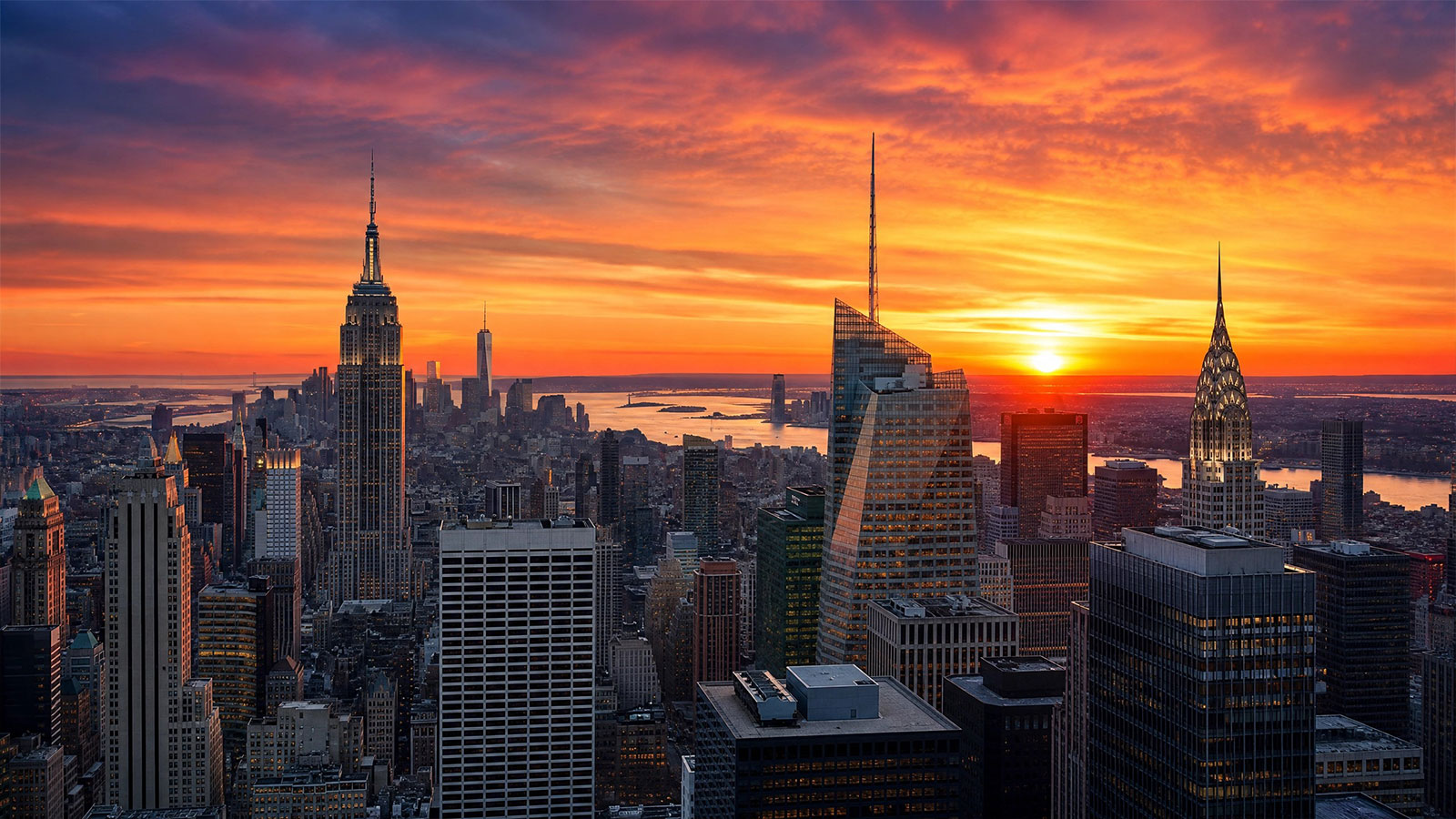
Statue of Liberty & Ellis Island
The Statue of Liberty stands on Liberty Island in New York Harbor and is one of America's most iconic landmarks.
You'll need to take the official ferry to Liberty Island and Ellis Island. A standard ticket covers the round-trip ferry and island access; visiting the pedestal or the crown requires a separate ticket type.
If you want to climb to the crown, plan well ahead—the official operator warns that crown tickets can sell out up to about 90 days in advance.
Official tickets: Statue City Cruises.
Times Square & Fifth Avenue
Times Square is one of New York's busiest commercial and entertainment districts, where giant video screens, Broadway theaters and surrounding restaurants come together to form the city's most iconic urban scene.
From there, continue to Fifth Avenue, St. Patrick's Cathedral and Rockefeller Center. If you enjoy high-altitude views, choose among Top of the Rock, the Empire State Building or One World Observatory—there's no need to visit every observation deck.
Central Park & The Metropolitan Museum of Art
Central Park is huge, so on a first visit focus on areas such as Bethesda Terrace, Bow Bridge and The Mall.
The Metropolitan Museum of Art sits along the park's eastern edge, with collections spanning ancient Egypt, European paintings, Asian art and American works. Museum lovers should set aside at least half a day.
Wall Street & the 9/11 Memorial
Lower Manhattan is a key area for New York's financial and modern history.
Wall Street, the New York Stock Exchange exterior, Charging Bull, Trinity Church and the 9/11 Memorial plaza can be combined into a half-day route. If you want to visit the 9/11 Memorial Museum, check tickets and opening hours in advance.
Brooklyn Bridge & DUMBO
The Brooklyn Bridge is one of New York's most rewarding landmarks to explore on foot. Walking from the Manhattan side into Brooklyn, you can take in the Manhattan Bridge and city views from DUMBO. Allow 1–2 hours and go on a clear day.
Recommended time in New York: 3–4 days.
On a first visit, three days covers most of the classic sights. If you want to add museums, a Broadway show, shopping or free time, extend it to four.
2. Philadelphia: Independence Hall, the Liberty Bell and America's Founding History
Philadelphia sits between New York and Washington and is a key city for history and culture travel in the US.
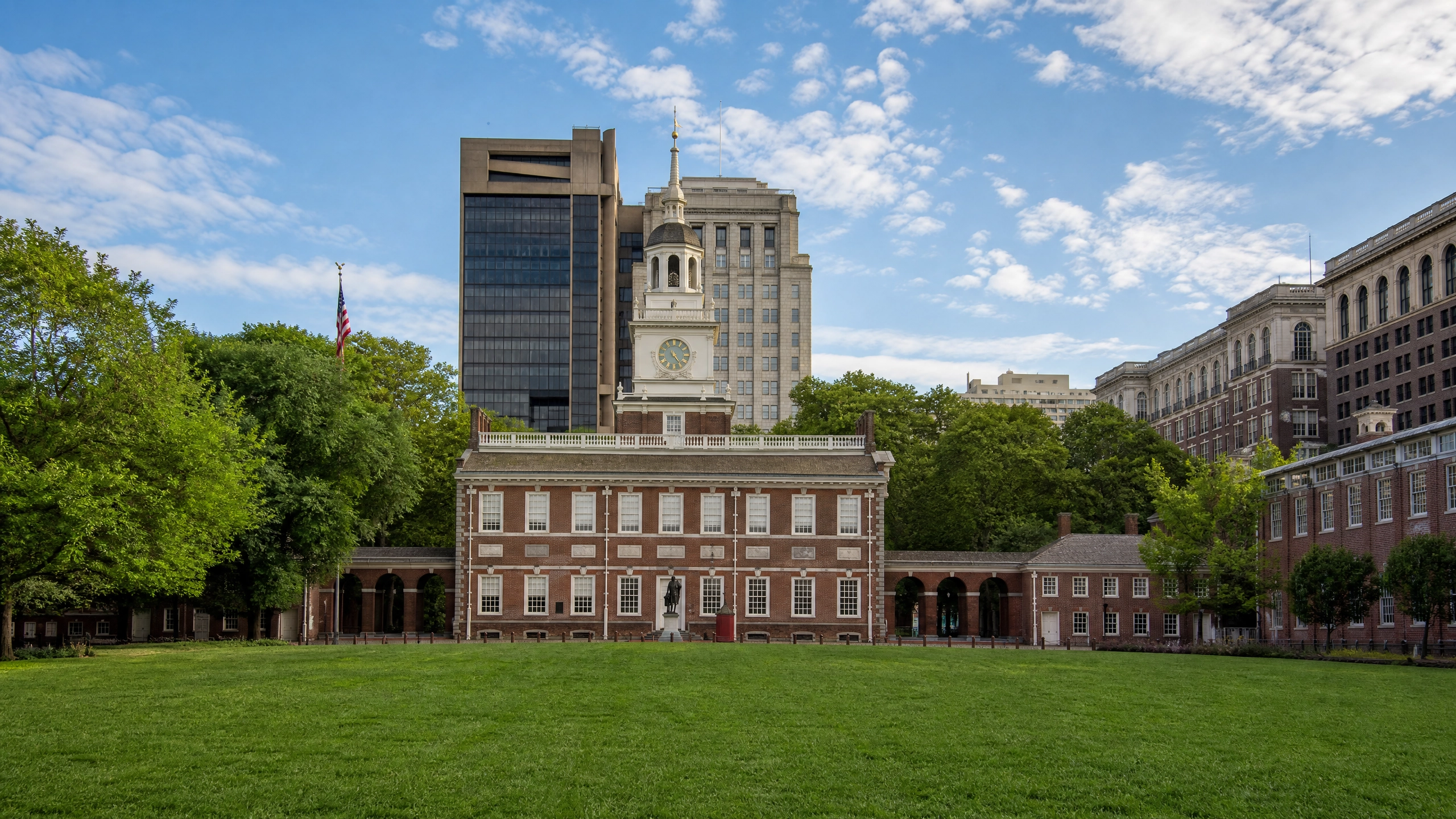
The Declaration of Independence was adopted in Philadelphia in 1776, and the US Constitution was drafted here in 1787.
Independence Hall is a centerpiece of Independence National Historical Park and one of the most worthwhile places for understanding America's founding.
Interior visits follow the National Park Service's reservation rules. Free timed-entry tickets are available for some slots, though each reservation may carry a US$1 processing fee; bookings generally open 30 days in advance.
Official information: Independence Hall Tickets.
The Liberty Bell stands near Independence Hall and is an important symbol of American independence. Its famous crack makes it one of the most recognizable historical artifacts in the country.
You can easily pair the Liberty Bell and Independence Hall on the same walking route.
Reading Terminal Market
This is one of Philadelphia's best food markets. Try a Philly cheesesteak, baked goods and other local specialties.
Philadelphia Museum of Art
The Philadelphia Museum of Art is known for its extensive collection and for the steps featured in the film Rocky. Even if you don't go inside, the building and its steps are a popular photo spot.
Recommended time in Philadelphia: about 1 day.
If you're focused on American history and the Old City, one day covers the main sights. If you also want several museums and universities, add a second day.
3. Washington: the White House, the US Capitol and the Smithsonian Museums
Washington, D.C. is the US capital. Unlike New York's commercial buzz, it's a city of national monuments, government buildings and museums.

National Mall
The National Mall is the top area to cover on a first visit to Washington. The Lincoln Memorial, Washington Monument, World War II Memorial and Vietnam Veterans Memorial are all clustered around it.
These sights are relatively close together, so you can explore on foot or combine walking with the Metro and shared bikes.
White House & the US Capitol
The White House is the official residence and workplace of the US president. Visitors can usually take photos from the public viewing areas outside.
To tour the interior, you need to submit a request in advance through the proper channels; a regular city sightseeing ticket does not grant entry.
For the US Capitol, check arrangements through the official visitor center—some tours require advance booking.
Smithsonian Museums
Washington's Smithsonian Museums are ideal for families, students and culture travelers.
Among the most worthwhile are:
| Museum | Highlights |
|---|---|
| National Museum of Natural History | Dinosaurs, gems, natural history |
| National Air and Space Museum | Aircraft, spacecraft, space exploration |
| National Museum of American History | American society, history and culture |
| National Museum of African American History and Culture | African American history and culture |
| National Gallery of Art | European and American art collections |
Most Smithsonian museums are free, but some require free timed-entry tickets—such as the National Air and Space Museum, the National Museum of African American History and Culture and the National Zoo. Check the official website for the latest reservation policies before you go.
Official information: Smithsonian Museums.
Tidal Basin & the Jefferson Memorial
If you're in Washington in late March or early April 2027, consider a stop at the Tidal Basin.
During the spring cherry-blossom season, it's one of the most popular viewing spots. At other times, you can walk the loop around the basin and take in the Jefferson Memorial and surrounding monuments.
Recommended time in Washington: 2–3 days.
Spend day one on the National Mall and the monuments, day two on the Smithsonian Museums, and if you have extra time, add Georgetown or Arlington National Cemetery.
4. Boston: the Freedom Trail, Harvard University and MIT
Boston is the capital of Massachusetts and a major city for American history and higher education.

Freedom Trail
The Freedom Trail is Boston's signature historic walking route. Stretching about 2.5 miles (roughly 4 km), it links 16 important historical sites.
The route passes Boston Common, the Massachusetts State House, Old North Church and Quincy Market, among others.
You can join a local guided tour or follow the red brick line on the ground at your own pace.
Official information: The Freedom Trail.
Harvard University & MIT
Harvard University and MIT are both in Cambridge, just a short distance from downtown Boston.
At Harvard, explore Harvard Yard and the surrounding campus; at MIT, get a feel for the culture of technology, engineering and innovation.
The two campuses can be covered in half a day or a full day, and are especially worthwhile for students and families.
Note that not all classrooms and labs are open to casual visitors—indoor access should follow each school's visitor guidelines.
Quincy Market & the Boston Waterfront
Quincy Market is a popular dining and shopping area in Boston, where you can try lobster rolls, clam chowder and other New England specialties.
With extra time, add the Boston Public Garden, the Back Bay neighborhood and a harbor cruise.
Recommended time in Boston: about 2 days.
3. How to Plan 7, 9 or 10 Days on Your First East Coast Trip
The four cities are linked by rail and road, so you can choose a route to match the length of your vacation.
| Trip Length | Recommended Route | Best For |
|---|---|---|
| 5–6 days | New York + Washington | Short breaks, first time in the US |
| 7 days | Boston + New York + Philadelphia + Washington | Wanting to experience all four cities |
| 9 days | In-depth tour of all four | Those wanting more museums and city experiences |
| 10–12 days | Four cities + Niagara Falls | Adding natural scenery and the falls |
Option A: 7-Day Classic East Coast Tour
If you only have a week, you can still make the four cities your main goal, but you'll need to keep each stay tight.
| Day | Destination | Main Activities |
|---|---|---|
| D1 | Boston | Arrival, Freedom Trail area |
| D2 | Boston | Harvard, MIT, Quincy Market |
| D3 | New York | Train to New York, Times Square |
| D4 | New York | Statue of Liberty, Wall Street, Central Park |
| D5 | Philadelphia | Independence Hall, Liberty Bell, Museum of Art |
| D6 | Washington | National Mall, monuments, museums |
| D7 | Washington | Free time, departure |
This route suits independent travelers, but you'll need to buy train tickets, manage luggage and handle hotel check-ins between cities.
Option B: 9-Day In-Depth East Coast Tour
If you'd like a more relaxed pace through all four cities, consider:
| Day | Destination | Main Activities |
|---|---|---|
| D1 | Boston | Arrival, recover from jet lag |
| D2 | Boston | Freedom Trail, Quincy Market |
| D3 | Boston | Harvard, MIT |
| D4 | New York | Travel to New York, Fifth Avenue, Times Square |
| D5 | New York | Statue of Liberty, Wall Street |
| D6 | New York | Central Park, museums, Brooklyn |
| D7 | Philadelphia | Independence Hall, Liberty Bell |
| D8 | Washington | National Mall, White House exterior |
| D9 | Washington | Museums, departure |
This route allows more time in each city and also works well for those traveling with children or older adults.
Option C: 10–12 Days with Niagara Falls Added

If you'd like to add a natural wonder beyond the classic four cities, consider Niagara Falls.
The falls sit on the border between New York State and the Canadian province of Ontario. The main viewing areas include Niagara Falls State Park on the US side and viewing areas on the Canadian side.
On the US side, consider:
- Prospect Point observation area
- Cave of the Winds
- Goat Island
- Niagara Falls Observation Tower
- Evening illumination
In summer, you can also ride the Maid of the Mist, though some boats and walkways adjust their hours in winter.
Note that getting to Niagara Falls from Boston, New York, Philadelphia or Washington requires separate travel time—it isn't a convenient stop along the four-city rail line.
If you'd like to combine the falls, the Corning Museum of Glass and the four East Coast cities in one trip, compare the local tours described later in this guide.
4. If You Only Have 7 Days, Is a Usitour East Coast Tour Worth Comparing?
For first-time visitors to the US, there's also a more worry-free option: joining a local multi-city tour.
The reason is simple. The four East Coast cities are linked by rail, but add the Corning Museum of Glass and Niagara Falls, and arranging your own transportation gets complicated—especially long transfers, hotel switches and hauling luggage.
Usitour currently offers a 7-day East Coast itinerary, product no. 206535.
Usitour 7-Day US East Coast Tour
View product details and available dates for 206535
The page currently shows a reference starting price of from US$436. This is the current page's reference price, not a confirmed fixed-rate quote for 2027 departures.

This itinerary combines New York, Philadelphia, Washington, Corning, Niagara Falls and Boston in a single trip.
Sample itinerary:
| Day | Main Arrangements |
|---|---|
| D1 | Arrive in New York, airport transfer and check-in |
| D2 | Free time in New York, optional local sightseeing |
| D3 | New York city tour: Times Square, Wall Street, Statue of Liberty, etc. |
| D4 | Philadelphia, Independence Hall, Liberty Bell, then on to Washington |
| D5 | Corning Museum of Glass, Buffalo and Niagara Falls at night |
| D6 | Sightseeing around Niagara Falls, then on to Boston |
| D7 | Boston, Harvard University, MIT, Freedom Trail; tour ends per selected option |
Depending on the departure date, the route may run in reverse and drop-off points may vary. Some dates allow you to end in New York or Boston—be sure to confirm at the time of booking.
Who is this product for?
- First-time visitors to the US who want to experience several East Coast cities at once.
- Those with about seven days of vacation who'd rather not handle long-distance transportation themselves.
- Travelers who want history and culture, college campuses and Niagara Falls in one trip.
- Families looking to cut down on cross-city hotel and transportation logistics.
What's included in the base tour price?
According to the product page, it mainly includes:
- Six nights in standard twin/double rooms.
- A professional coach sized to the group.
- Professional bilingual guide and driver services.
- Commercial vehicle insurance and related taxes and fees.
- Group airport transfers from New York's three major airports at designated times.
What costs are not included?
- Meals.
- Admission tickets and any mandatory daily activity fees.
- Tips for the guide and driver.
- Gratuities or service fees for airport transfers.
- Optional boat rides, observation decks and other activities at your own expense.
The page suggests a guide and driver service fee of US$15 per person per day and an airport transfer tip of US$15 per person each way; the final charges are those listed in the order for your selected departure.
Also, rooms normally have two standard beds and no extra bed is available. Children, older travelers and anyone with mobility needs should confirm room and vehicle conditions before booking.
Compared with independent travel, this itinerary has the advantage of bundled transportation and accommodation. However, it covers a lot of ground each day, so it isn't ideal for travelers who want to linger at every sight.
5. How to Get Around Between East Coast Cities
For a first East Coast trip, there are three main transportation options: Amtrak rail, coach tours and renting a car.
1. Amtrak Rail: Best for Travel Between Boston, New York, Philadelphia and Washington
Amtrak's Northeast Corridor links key cities including Boston, New York, Philadelphia and Washington.
Main stations include:
| City | Main Train Stations |
|---|---|
| Boston | South Station, Back Bay |
| New York | Moynihan Train Hall / Penn Station |
| Philadelphia | 30th Street Station |
| Washington | Union Station |
The advantage here is city center to city center, without the repeated airport trips flying would require.
The Acela is faster, while the Northeast Regional runs more frequently, suiting different budgets.
Official information: Amtrak Northeast Regional.
Check exact schedules, fares and travel times for your travel dates, and book popular slots in advance—especially around holidays, weekends and summer.
2. Coach Tours: Best for Multi-Sight and Long-Distance Routes
If you need to visit several cities or suburban sights in one day, a coach is usually convenient.
For routes such as Niagara Falls, the Corning Museum of Glass and multi-city trips between Washington and Philadelphia, driving or joining a tour cuts down on transfers.
But watch the travel time on long coach rides, especially between New York and Niagara—don't treat the whole transit stretch as a full sightseeing day.
3. Renting a Car: Best for Adding Outlying Areas
If your plan includes New England towns, coastal areas or other remote spots, a rental car offers more flexibility.
But parking fees, traffic congestion and access restrictions in downtown New York, Boston and Washington can add to your budget.
If your itinerary sticks to the four major cities, you usually won't need a car throughout.
6. Where to Stay on Your First East Coast Trip
When choosing a hotel, weigh proximity to subways, train stations and the sights.
| City | Recommended Areas | Why |
|---|---|---|
| New York | Midtown, Long Island City | Easy subway access, great for sightseeing |
| Philadelphia | Center City, Old City | Close to historic sites and dining |
| Washington | Downtown, Penn Quarter, Dupont Circle | Convenient for the National Mall and Metro |
| Boston | Downtown, Back Bay | Ideal for the Freedom Trail and city sights |
Hotels in New York tend to be pricey, and Manhattan and Queens differ in transit convenience. If you choose an area like Long Island City, pay attention to the hotel's walking distance to the subway.
Philadelphia's and Boston's main historic sights are fairly concentrated, so staying downtown cuts commute time.
In Washington, stay close to a Metro station: the National Mall sights aren't far apart, but a full day of walking can still be tiring.
7. What's the Budget for an East Coast Trip in 2027?
The cost of an East Coast trip varies with the season, accommodation standard, number of travelers and mode of transportation.
The figures below are planned for two people traveling together, nine days and eight nights, at a moderate comfort level. They're estimates, not live quotes for specific dates.
| Expense Item | Estimated Total for Two |
|---|---|
| Intercity trains within the US | US$250–550 |
| Accommodation, 8 nights | US$1,600–2,800 |
| Meals | US$700–1,100 |
| Local transportation | US$150–300 |
| Sights and activities | US$250–500 |
| Other expenses | US$150–300 |
| Total | US$3,100–5,550 |
This excludes international round-trip flights and assumes two people sharing a room. Costs can be higher in peak season and around holidays.
If you opt for a local tour, factor in the tour price plus any excluded tickets, meals and tips—don't treat the advertised starting price as your total trip cost.
8. Frequently Asked Questions About East Coast Travel
Q1: Is seven days enough for a first East Coast trip?
A: Seven days is enough to cover the main sights in all four cities, but the pace is brisk. If you also want to visit Niagara Falls, consider a corresponding multi-city tour or extend your trip to 9–10 days.
Q2: In what order should I visit New York, Philadelphia, Washington and Boston?
A: If you're mainly traveling by rail, you can head south from Boston through New York and Philadelphia, ending in Washington—or do the reverse. It mostly depends on your international flight's entry and exit cities.
Q3: When do Washington's cherry blossoms bloom in 2027?
A: The 2027 National Cherry Blossom Festival is confirmed for March 20 to April 11, but the exact peak bloom date has not been announced. Follow the National Park Service's bloom forecast for the final word.
Q4: How many days should I spend in New York on a first visit?
A: Allow 3–4 days. Spend at least one day on the Statue of Liberty, Wall Street and the 9/11 Memorial, one on Central Park and museums, and another on Times Square, Fifth Avenue and Brooklyn.
Q5: Is Philadelphia worth visiting?
A: Yes. Independence Hall and the Liberty Bell are major American history sights, and the compact Old City makes for an easy day trip.
Q6: Are all of Washington's museums free?
A: Many Smithsonian museums are free, but some require advance booking of free timed tickets. Confirm the latest rules before you go.
Q7: Can I visit Harvard and MIT in Boston in one day?
A: Yes. Both schools are in Cambridge, so you can spend half a day around the campuses, then head into downtown Boston for the Freedom Trail or Quincy Market.
Q8: How many days should I allow for Niagara Falls?
A: If you're only visiting the US side, allow at least one day. If you also want both sides, a boat ride and nearby attractions, plan on two days or more and check the entry requirements for Canada.
Q9: Does Usitour's 7-day East Coast product include all attraction tickets?
A: No. The product mainly covers hotels, coach transportation and guide services. Attraction tickets and some activities cost extra—check the inclusions listed in your specific order.
Q10: Is Usitour's 7-day East Coast product suitable for children?
A: It suits families who want to experience several cities at once, but the pace is tight. The product page notes that no extra beds are available and it is not wheelchair accessible. Decide based on your child's age, the room setup and each day's driving time.
Q11: Do I need to rent a car for an independent East Coast trip?
A: Usually not if you're mainly visiting the four cities. Use Amtrak between cities and the subway and walking within them. If you're adding New England towns and remote areas, a car offers more flexibility.
Q12: For a first East Coast trip, is a tour better than planning it myself?
A: If you like setting your own sights and pace, combine rail travel with local sightseeing. If you're short on time and want to minimize multi-city transportation and hotel logistics, consider a local tour. Families or those with special needs can also compare private transfers and custom itineraries.
9. Useful Resources for East Coast Travel
New York
Philadelphia
Washington
Boston
Intercity Transportation
Usitour Travel Products
On a first East Coast trip, the most important thing is to choose a route based on your vacation length, interests and preferred transportation. New York is great for city sightseeing, Philadelphia for history and culture, Washington for museums and national monuments, and Boston for college campuses and historic neighborhoods. If you also want Niagara Falls, arrange extra travel time in advance or pick a tour that already bundles the sights and transfers.
Whether you choose in-depth city exploration, a local tour or a custom family trip, decide what you want to experience first, then work out how to connect the cities. That way, you won't be rushing between sights every day, and your first East Coast trip will feel complete and well put together.
Recommended Products
No recommended products


More Popular Experiences
No recommended products


